iOS App Development Companies in 2026: a Shortlist of 8 Swift Teams
The iOS app development companies worth shortlisting in 2026 are YuSMP Group, Mercury Development, Fueled, TELUS Digital, ArcTouch, Intellectsoft, Atomic Object and hedgehog lab. We compared them on shipped iPhone apps, Swift depth, years on the market and clients named on their own sites.
By Yury Pukhov, CEO of YuSMP Group · Published · Updated · 17 min read
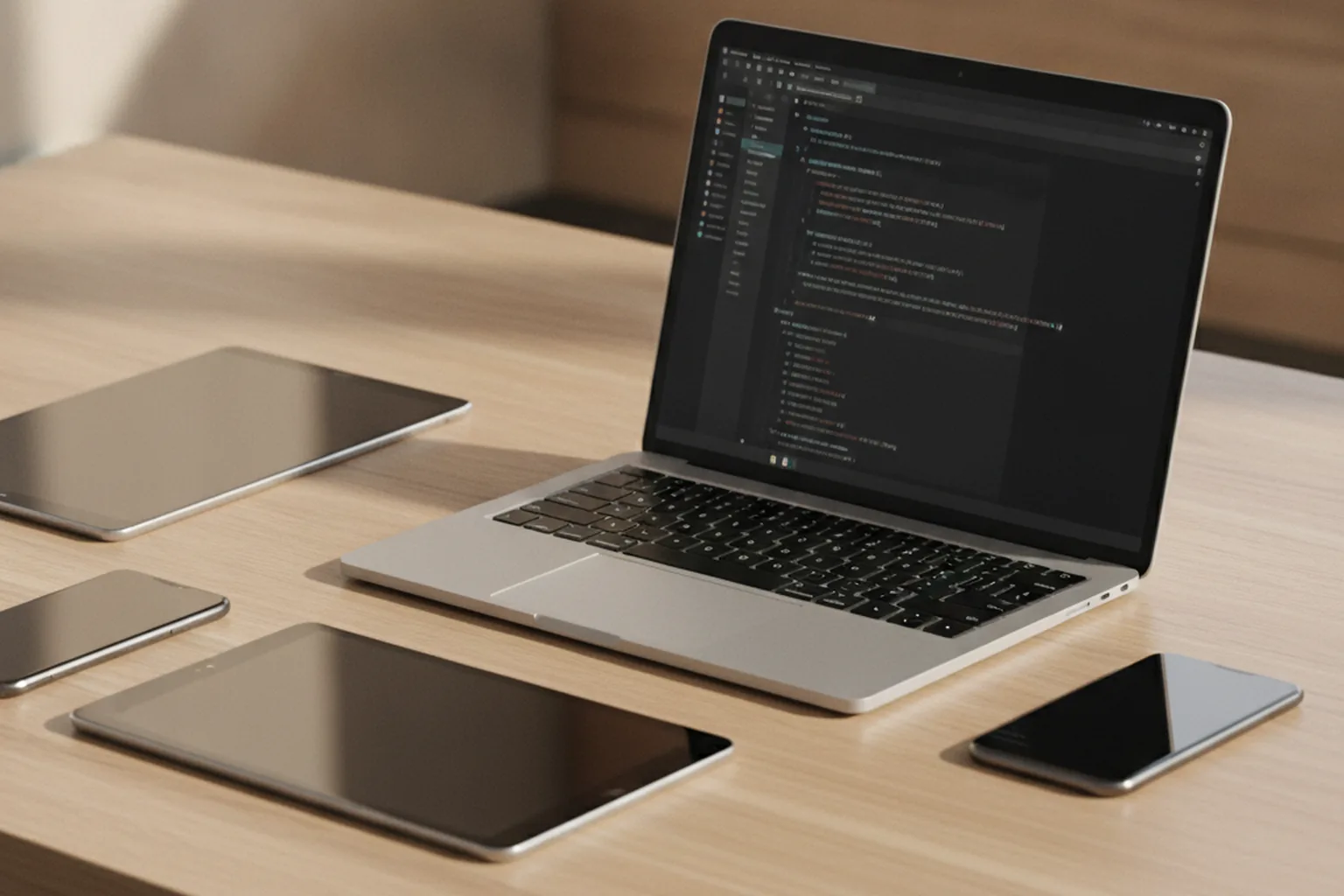
An iOS app development company is a team that designs, builds, submits and maintains apps for iPhone, iPad and often Apple Watch, usually together with the API behind them. All eight firms below ship production apps to the App Store and name real apps or clients on their own websites.
If you already know you want a native iPhone app, our page on iOS app development services in Swift and SwiftUI lists the four fixed-scope tiers, the stack and the review checklist we use. This shortlist covers the step before that: choosing two or three iOS teams and comparing them on the same evidence. For a view across all platforms, see our wider comparison of mobile app development companies.
Every fact about companies 2 to 8 comes from the company's own website, an SEC filing or Companies House, checked on 27 November 2026 and linked in each card. YuSMP Group compiled this list and placed its own studio first, so judge us by the same criteria as everyone else.
 1. YuSMP Groupour studio
 2. Mercury DevelopmentApple-featured apps
 3. Fueleddesign-led brands
 4. TELUS Digitalenterprise scale
 5. ArcTouchconnected products
 6. Intellectsoftenterprise and compliance
 7. Atomic Objectemployee-owned
 8. hedgehog labUK finance apps
Key takeaways
- Shortlist by the kind of iPhone app you need: Mercury for wearables, ArcTouch for connected hardware, Fueled for brand-led consumer apps.
- Install two apps from each portfolio and check the date of the last App Store update.
- Since 28 April 2026, App Store uploads must be built with Xcode 26 and the iOS 26 SDK, so your vendor needs an upgrade plan every year.
- Keep the Apple Developer account, the repository and the signing certificates in your company's name.
How did we pick these iOS app development companies?
We picked these iOS app development companies on six criteria, each checked against public sources rather than sales pages. A firm made the cut only if iPhone apps are a core service and it names real iOS apps or clients on its own site.
| Criterion | What we checked | Where we checked it |
|---|---|---|
| Shipped iOS apps | Named iPhone or iPad apps and clients, not anonymous screenshots | Portfolio and case pages, App Store |
| Swift and Apple frameworks | Swift, SwiftUI, watchOS, HealthKit, device and wearable work | Service pages and case studies |
| Years on the market | Founding year and continuity | About pages, SEC filings, Companies House |
| Client signals | Named brands, long relationships, testimonials with names | Company site |
| Scope beyond the app | Backend, admin panel, design, connected devices | Service descriptions |
| Post-launch support | Yearly iOS and Xcode upgrades, App Review handling, maintenance | Service descriptions |
Positions 2 to 8 are not a score. We ordered them to give you a spread of profiles: Apple-platform and brand specialists first, then enterprise and connected-product teams, then consultancies in the US Midwest and the UK. Pick by fit, not by number.
We left out review-site scores, paid badges and awards we could not confirm on a primary page. Where a firm is a weaker fit for some projects, the card says who it suits instead of listing drawbacks.
iOS app development companies compared side by side
The table compares all eight iOS app development companies by platform focus, base and founding year, main strength and the client each one suits best.
| # | Company | iOS focus | Base / founded | Strength | Best for |
|---|---|---|---|---|---|
| 1 | YuSMP Group (our studio) | Swift, SwiftUI; app + backend | Yerevan office, US/EU clients / 2017 | Fixed tiers from $3,500 | Startups and SMBs with a fixed budget |
| 2 | Mercury Development | iOS, watchOS, macOS, Android | US / 1999 | Apple-featured apps, wearables | Fitness and device makers |
| 3 | Fueled | iOS apps plus web platforms | US / 2007 | Brand-grade design | Consumer and retail brands |
| 4 | TELUS Digital | Native apps and digital products | Charlottesville, VA / 2008 | 700+ apps and products | Enterprises with app portfolios |
| 5 | ArcTouch | Apps and connected products | San Francisco / 2008 | App plus device experiences | IoT and consumer brands |
| 6 | Intellectsoft | Swift, Kotlin, React Native | Miami, FL / 2007 | Enterprise integrations | Corporates with ERP and workflow apps |
| 7 | Atomic Object | Mobile, web, IoT | Grand Rapids, MI / 2001 | Employee-owned, long tenures | US healthcare and manufacturing |
| 8 | hedgehog lab | iOS and Android | Newcastle, UK / 2006 | Regulated sectors | UK fintech and public bodies |
The 8 iOS app development companies, one by one
Each card shows the company's logo, iOS focus, base and founding year, then the public apps or clients behind those facts. Links to company websites open in a new tab and carry no endorsement.
1YuSMP Group: native Swift apps with the backend included
- our studio
- since 2017
- Yerevan office, US and EU clients
- 120+ projects delivered
- Swift · SwiftUI
YuSMP Group builds native iPhone and iPad apps in Swift and SwiftUI together with the API and the web admin panel, so one team owns the whole product. The company was founded in 2017, has 9+ years in business and 120+ delivered projects, and has worked with US and EU clients since 2024 (About YuSMP Group). Since 2026, AI-assisted delivery is our default, with AI tools working inside code review and a security envelope.
Our iOS work is sold in fixed tiers on the iOS app development service page: an MVP from $3,500 in 4–8 weeks with an App Store release, a production app from $5,800, a full product from $9,200 and a complex app from $11,500. A pre-flight App Review checklist runs before every submission.
- SignatoryPro. Native Swift and Kotlin apps plus a React CRM that let clients of an international law firm sign documents remotely with SMS codes; Swift gave access to the file system and biometrics (case study).
- Unilab. A Swift app on the App Store where patients of a medical lab chain book visits and read their test results, linked to the booking system and 1C (case study).
- GromSecurity. One native app in place of three for a security operator: alarm control, smart home and CCTV, built in Swift and Kotlin in a 12–20 week project class (case study).
Who it suits: startups and SMBs that want a published price, an App Store release in the first tier and one team for app, API and admin panel. Less of a fit for programmes that need dozens of iOS engineers on day one.
Our iOS development service →
2Mercury Development: Apple-featured iPhone and watchOS apps
- US company
- since 1999
- 1,500+ projects
- iOS · watchOS · macOS
Mercury Development has built custom software since 1999 and reports more than 1,500 completed projects for iOS, Android, desktop, cloud backends and the web, with over 40 million active users (Mercury, company page). The company states that several of its iOS and watchOS apps have been featured by Apple and that its apps have reached the Top 100 of the App Store charts.
Named clients on the home page include Google, Tonal and Fitbit, which suggests strong experience with fitness hardware and wearables. Mercury also says that all work is work-for-hire, with the customer owning the code and all underlying IP.
Who it suits: fitness, wellness and hardware companies whose iPhone app has to pair with a watch or a device, and teams that need iOS, watchOS and macOS from one vendor.
Mercury Development website →
3Fueled: design-led iPhone apps for consumer brands
- founded 2007
- 300+ experts
- merged with 10up
Fueled was founded in 2007 and lists 300+ experts across strategy, design and engineering (fueled.com/about). Its team has built apps and digital products for brands such as Victoria's Secret, Clinique and SoulCycle, where the iPhone app sits at the centre of the customer relationship.
The merger of Fueled and 10up added large WordPress and web platforms to the same vendor. A brand can therefore keep its iOS app, website and content platform with one partner, which helps when all three share a login, a catalogue or a loyalty programme.
Who it suits: lifestyle, retail and media brands where the look and feel of the iOS app is part of the brand itself.
Fueled website →
4TELUS Digital (WillowTree): enterprise portfolios of native apps
- Charlottesville, Virginia
- founded 2008
- 700+ apps and products
- part of TELUS since 2023
WillowTree built its name as a US native app studio and now operates as TELUS Digital. According to TELUS International's 2022 filing with the SEC, WillowTree was founded in 2008, is headquartered in Charlottesville and ran 13 studios across the US, Canada, Brazil, Portugal, Spain, Poland and Romania.
The January 2023 closing release put the team at more than 1,000 people and said they had shipped over 700 native mobile apps, websites and digital products for clients including FOX, PepsiCo, Synchrony and Marriott (SEC filing).
Who it suits: large companies that run several consumer iOS apps under one contract and need design, engineering and analytics for a multi-year roadmap.
TELUS Digital website →
5ArcTouch: iPhone apps tied to physical products
- San Francisco, New York, Austin
- since 2008
- apps + connected devices
ArcTouch says it has designed and built digital products “since the dawn of the App Store in 2008”, and its offices are listed in San Francisco, New York, Austin, Toronto, London, Paris and Florianópolis (arctouch.com).
The portfolio covers apps, websites and connected products. Public examples include the e-commerce and loyalty app for SKIMS and a connected product for 3M Filtrete, where the app works together with home hardware.
Who it suits: consumer brands and hardware makers whose iOS app has to talk to a device, a sensor or a smart-home product.
ArcTouch website →
6Intellectsoft: enterprise iOS apps with integrations
- Miami, Florida
- since 2007
- 600+ mobile and web apps
- ISO 9001:2015
Intellectsoft has helped companies and established brands with software since 2007 and lists its US address in Miami, Florida, with a second office in London (intellectsoft.net). The company holds ISO 9001:2015 certification.
Its mobile service page reports 600+ mobile and web applications built with Swift, Kotlin and React Native, 9 offices in 7 countries and 35 Fortune 1000 clients (Intellectsoft, mobile app development). The focus is on apps that plug into ERP, workflow and data systems.
Who it suits: mid-size and large companies that need an iPhone app connected to ERP, field workflows or internal data, with formal quality processes.
Intellectsoft website →
7Atomic Object: an employee-owned US product consultancy
- Grand Rapids, Ann Arbor, Chicago, Raleigh
- founded 2001
- employee-owned
Atomic Object is an employee-owned software design and development consultancy founded in 2001, with offices in Ann Arbor, Chicago, Grand Rapids and Raleigh (atomicobject.com). Mobile apps sit next to web, desktop, cloud and IoT work.
Case studies on its site include Quell and Cleveland Clinic, and the client list names Ford, Qualcomm, Bosch and Corewell Health. The mix suggests a team used to regulated healthcare buyers and to apps that work with connected hardware.
Who it suits: US companies in healthcare, manufacturing and finance that want a local team in the Midwest or Southeast and value the stability of an employee-owned firm.
Atomic Object website →
8hedgehog lab: UK iOS apps for regulated sectors
- Newcastle upon Tyne, UK
- incorporated 2006
- financial services · public sector
hedgehog lab was incorporated on 9 November 2006 (Companies House, no. 05993194) and has its HQ in Newcastle upon Tyne (hedgehoglab.com). The studio groups its work by sector, with financial services and government and public sector among them.
The featured case is dodl, an iOS and Android investing app made for AJ Bell and aimed at first-time investors. A testimonial from AJ Bell on the home page backs the case with a named client.
Who it suits: UK companies in investing, finance and the public sector that need a local iOS team used to compliance reviews.
hedgehog lab website →Which iOS app development company fits your app?
The right iOS app development company depends on what the app touches: a watch, a device, an ERP system or a brand catalogue. Use the scenarios below to narrow the list to two or three teams before you send a brief.
| Your situation | Start with |
|---|---|
| iPhone MVP with a fixed budget and an App Store release | YuSMP Group |
| App that pairs with Apple Watch or fitness hardware | Mercury Development, ArcTouch |
| Consumer brand app where design leads | Fueled, ArcTouch |
| Several apps under one enterprise contract | TELUS Digital, Intellectsoft |
| iOS app tied to ERP or field workflows | Intellectsoft, YuSMP Group |
| US healthcare or manufacturing buyer | Atomic Object |
| UK investing app or public-sector buyer | hedgehog lab |
Decide the platform question first. If you need Android in the same release, read our comparison of iOS vs Android: which platform to build first and the guide to React Native vs Swift. Teams that stay native on both platforms can also look at our Android development service.
How to choose an iOS app development company: a 9-point checklist
Choose an iOS app development company by checking evidence in this order: shipped apps, Swift depth, people, review process, ownership and support. Run every shortlisted team through the same nine points and write the answers down.
- Install two of their iPhone apps. Check launch speed, scrolling, crashes and the date of the last App Store update.
- Ask which Apple frameworks they used. HealthKit, Core Bluetooth, StoreKit 2, widgets and watchOS each need hands-on experience.
- Check the SwiftUI and UIKit mix. A team should explain where it keeps UIKit and how it migrates older Objective-C code.
- Ask for their App Review record. Request two examples of rejections and how they fixed them; every iOS team has some.
- Meet the people who will build it. Get the names of the lead iOS developer, designer and QA engineer, not only the sales team.
- Confirm account ownership. Your company should own the Apple Developer account, App Store Connect, signing certificates and the repository.
- Read how they test. Look for XCTest and UI tests on core flows, TestFlight builds every sprint and crash reporting in production.
- Plan the yearly upgrade. Agree who pays for the new Xcode and iOS SDK each spring and how fast they ship fixes after a major iOS release.
- Call one reference. Ask a past client what went wrong and how the team handled it.
For the full engineering side of a native project, read our guide to iOS software development and the note on Swift vs Objective-C if you inherit an older codebase.
How much does iOS app development cost in 2026?
iOS app development in 2026 costs from a few thousand dollars for a narrow MVP to six figures for a complex product, and scope drives the price more than the vendor's country. As a reference point, YuSMP Group publishes fixed tiers on its iOS service page:
| Tier (YuSMP Group, iOS) | Price from | What it includes |
|---|---|---|
| MVP | $3,500 | 4–8 weeks, core user flow in Swift and SwiftUI, App Store release |
| Production app | $5,800 | Several features, backend integration, offline persistence with SwiftData or Core Data, analytics |
| Full product | $9,200 | Multiple modules and roles, external integrations, CI/CD, on-device QA |
| Complex app | $11,500 | Payments, offline-first sync, native SDKs, scale and A/B tests |
Prices come from our iOS service page on 27 November 2026; the full breakdown is on the pricing page. The other companies on this list quote per project after discovery, so ask each one for a written estimate on the same brief.
What drives the price of an iPhone app up
- Apple Watch, iPad and widgets. Each extra surface adds design, build and test time.
- Device and health data. Bluetooth hardware, HealthKit and background sync need careful testing on real devices.
- Payments. Digital goods go through in-app purchase; Apple charges a reduced 15% commission in its App Store Small Business Program for developers with up to $1 million in proceeds.
- Compliance. Health, finance and children's apps need privacy work, audits and documentation.
For budget detail, read our mobile app development cost guide, the app timeline guide and the app maintenance cost guide.
Which Apple rules change the scope of an iOS project in 2026?
Apple's yearly SDK deadline is the rule that changes iOS project scope most in 2026, so check that your shortlisted company plans for it. Four requirements come up in almost every project:
- Build requirement. Since 28 April 2026, apps uploaded to App Store Connect must be built with Xcode 26 or later using the iOS 26 SDK (Apple Developer, upcoming requirements).
- Privacy manifest. Since 1 May 2024, new and updated apps must declare approved reasons for listed APIs, including APIs used by third-party SDKs (same Apple page).
- Account deletion. Apps that let users create an account must also let them delete it from within the app (Apple, offering account deletion in your app).
- EU distribution. In the EU, apps can also be distributed through alternative marketplaces, which adds a contract and a notarisation step; see our note on alternative app stores in the EU.
A vendor that leaves these deadlines out of its support plan leaves you with an app that cannot ship updates. Ask every shortlisted company how it handles the yearly Xcode release and who pays for the work. Privacy rules also apply outside the store; our article on mobile app security and GDPR compliance covers the data side.
Our take: where iOS projects go wrong before the first line of Swift
In our experience, most iOS budget problems start at vendor selection, not in development. Below are patterns we see when clients come to us after a first attempt elsewhere; read them as our opinion, not as market data.
- The app was estimated without App Review. Nobody budgeted for review questions, demo accounts and privacy labels, so the first release slipped by weeks.
- The developer account belonged to the vendor. Moving an app between Apple accounts takes time and can break in-app purchases, so we ask clients to open their own account before the first TestFlight build.
- Native was chosen by habit. A Swift team will propose Swift for every brief. We chose native Swift for SignatoryPro because signing needed file-system and biometric access, and we would not insist on it for a catalogue app.
- No owner for the backend. The iPhone app was ready, while the API and admin panel were “to be discussed”. We now put all three into the first estimate.
When is a native Swift app not worth it?
We think a native Swift build is not always the right call. If your app is mostly forms and lists, must ship on Android in the same week and uses no Apple-only frameworks, a React Native or Flutter app can be cheaper to build and maintain. Native Swift pays off when the app depends on watchOS, HealthKit, Bluetooth hardware, widgets or heavy background work.
Our position is simple: shortlist the team whose shipped iPhone apps look most like yours, then judge it by the detail of its estimate and the engineers you meet. Projects are why we do this work, and the founder of YuSMP Group says it plainly:
“Projects are what charge me up.”
Yury Pukhov, founder and CEO of YuSMP Group (Meet the CEO)
Design and testing belong to the same decision. If your app has complex flows, bring in a UI/UX design team early, and plan QA and testing for every iOS release so updates do not break core flows.
Frequently asked questions
What is the best iOS app development company in 2026?
The best iOS app development company is the one whose shipped iPhone apps match your industry, integrations and budget. On this list, Mercury Development stands out for Apple-featured and watchOS apps, TELUS Digital for enterprise portfolios, ArcTouch for connected devices and YuSMP Group for fixed-price apps with the backend included.
How much does it cost to hire an iOS app development company?
An iOS app from a development company costs from a few thousand dollars for a narrow MVP to six figures for a complex product. YuSMP Group publishes tiers from $3,500 for an MVP to $11,500 for a complex app (service page, 27 November 2026); other firms on this list quote after discovery.
How long does it take an agency to build an iPhone app?
An iPhone MVP with one core flow takes 4–8 weeks at YuSMP Group, including App Store release. Products with roles, payments and several integrations take months: our GromSecurity case sits in a 12–20 week class and SignatoryPro in 16–28 weeks.
Should I hire a Swift team or a cross-platform team for my iOS app?
Hire a Swift team if the app depends on Apple frameworks such as HealthKit, Core Bluetooth, widgets, Apple Watch or heavy background work. Choose React Native or Flutter if you need Android at the same time and most screens are forms and lists on top of an API.
Do iOS development companies handle App Store submission?
Most iOS development companies on this list handle App Store submission, but confirm it in the contract. Ask who owns the Apple Developer account, who answers App Review questions and who updates the privacy labels when an SDK changes.
Did YuSMP Group put itself first on this list?
Yes. YuSMP Group compiled this list and placed its own studio first, which we state at the top of the page. Companies 2 to 8 are real firms with facts linked to their own websites or public filings, so you can judge every team by the same criteria.
Sources
- Apple Developer: upcoming requirements (checked 27 November 2026)
- Apple Developer: offering account deletion in your app
- Apple: App Store Small Business Program
- SEC: TELUS International announces agreement to acquire WillowTree (2022)
- SEC: TELUS International completes acquisition of WillowTree (2023)
- Companies House: hedgehog lab Limited
- Company facts for positions 2 to 8: each company's own website, linked in its card (checked 27 November 2026)
See also
- Mobile app development companies compared (all platforms)
- UI/UX design agencies compared
- HIPAA-compliant software development companies
- Nearshore software companies in Europe
- Android app development companies compared
- Flutter app development companies compared
- React Native development companies compared
- All vendor comparisons
Want a second opinion on your iOS app plan?
Tell us where you want to be in twelve months. We’ll come back with a plan to get you there.
Get a proposal
Share a few details and a senior consultant will reply within one business day.
- Requirements review and tech-stack recommendations
- Estimate of timeline, budget and team composition
- No commitment — just a clear plan
Email: sales@yusmpgroup.com
Phone: +374 44 871 811
Offices: KAMAR Business Center, Vazgen Sargsyan St. 2, Yerevan, Armenia · Remote — East-Coast US overlap (9 AM–1 PM ET)