What we build
Custom CRM systems, platform CRM implementation and customization, CRM integrations, data migration from legacy CRMs or spreadsheets, and ongoing support.
We design, build and implement CRM software around how your team actually sells and serves customers. That can be a custom CRM written from scratch, or Dynamics 365, Salesforce or HubSpot configured, extended and wired into the rest of your stack. It is part of our custom software development practice, so the same engineers handle the data model, the integrations and the apps.
GDPR-aligned · ISO 27001 ready · SOC 2 Type II in progress · HIPAA-capable · CCPA-acknowledged · CET workday with 9 AM–1 PM ET overlap
Custom CRM development means building customer relationship management software around your own sales stages, service rules, roles and data, instead of reshaping the business to fit a vendor's default screens. Some teams need a CRM built from the ground up. Others already pay for a platform and need it implemented properly, connected to the ERP and the phone system, and cleaned of five years of duplicate contacts.
We do both. If you are still deciding whether to build or buy, our full guide to CRM software development costs and features walks through the trade-offs in detail. For larger programs where the CRM is one of several connected systems, see our enterprise software development services.
Custom CRM systems, platform CRM implementation and customization, CRM integrations, data migration from legacy CRMs or spreadsheets, and ongoing support.
Fully custom stacks (React, Node.js, Laravel, .NET, PostgreSQL) plus Microsoft Dynamics 365, Salesforce, HubSpot and open-source CRMs such as Odoo and SuiteCRM.
B2B sales teams with long deal cycles, service businesses with complex intake, and companies whose current CRM is either too rigid or barely used.
A short paid discovery that maps your process and fixes the scope, then a fixed-price build or a dedicated team. A senior engineer replies to every request within one business day.
A custom CRM development company delivers working software that holds one reliable record of every customer, runs your pipeline the way your team sells, and automates the routine steps around it.
There are two routes to that result, and the difference matters for budget and risk. A custom CRM is written for you: the entities, fields, permissions and screens follow your process exactly, and there is no per-seat licence. A customized platform CRM starts from Dynamics 365, Salesforce or HubSpot and adds custom objects, workflows, apps and integrations on top. The second route launches faster; the first gives more control when your process is unusual or the licence bill keeps growing.
Either way, a CRM project should end with outcomes you can check, not just a deployed system:
Our CRM software development services cover the whole lifecycle, from choosing a platform to keeping the system healthy years after launch. You can take one service or the full set.
A CRM built from scratch around your data model: accounts, contacts, deals, custom entities and the relationships between them. We design role-based views for sales, service, finance and management, add client or partner portals where needed, and ship web and mobile apps from one back end. You get: source code, an admin panel, API documentation and deployment scripts you control.
Rolling out a CRM so that people use it. We configure pipelines, fields, user roles and permissions, migrate and deduplicate existing data, set up email and calendar sync, and train each team on the screens it will use daily. After go-live we stay for a hypercare period to fix what real use uncovers. You get: a configured system, migrated data, role-based training and a go-live checklist. For the step-by-step CRM implementation process and cost breakdown, read our implementation guide.
CRM software consulting for teams choosing a platform or questioning the one they have. We map the current sales and service process, review the CRM against it, and recommend whether to fix, extend, replace or build. We also take on CRM rescue: rollouts that stalled, with low adoption and messy data. You get: a process map, a gap list ranked by impact and a costed roadmap.
When a platform covers most needs, we build the rest: custom objects and forms, plugins, Power Apps, Lightning components, HubSpot custom cards, approval flows and calculation engines. Customizations follow the platform's extension model, so upgrades do not break them. You get: versioned, documented extensions deployed through a sandbox first.
Connecting the CRM to the systems around it: ERP and accounting, telephony and contact center, email and calendars, e-commerce, marketing automation, document signing and BI. We use native connectors where they are reliable and custom APIs or an integration layer where they are not. You get: documented data flows, error handling and monitoring for every sync.
Moving from a legacy CRM, an in-house database or spreadsheets to a new system without losing history. We map fields, merge duplicates, validate records against rules you approve and run trial migrations before the final cut-over. Old custom CRMs can be modernized in stages instead of replaced in one risky jump. You get: a mapping document, migration reports and a rollback plan.
After launch the CRM keeps changing with the business. We handle platform updates, bug fixes, new fields and workflows, performance tuning and integration monitoring, and we review adoption data to see which screens people avoid. You get: a maintained system and a running backlog of improvements agreed with you.
A custom CRM fits when your process is a competitive advantage or your integrations are complex; an off-the-shelf CRM fits when standard sales and service flows cover most of what you do. Many companies land in between, with a platform CRM and custom development on top. The table compares the three options.
| Criterion | Off-the-shelf CRM (Salesforce, HubSpot, Zoho as configured) | Customized platform CRM (platform + custom development) | Fully custom CRM |
|---|---|---|---|
| Workflow fit | Standard pipelines; your process adapts to the tool | Close fit through custom objects and flows | Exact fit, every field and rule is yours |
| Time to first use | Fastest, often weeks | Weeks to a few months | Months; an MVP can go live first |
| Upfront cost | Low | Medium | Highest |
| Licence cost over 3 to 5 years | Grows with every seat and add-on | Grows with seats, plus development | No per-seat licence; hosting and support only |
| Integrations | Marketplace connectors; limited for legacy systems | Connectors plus custom APIs | Built for your systems from day one |
| Data ownership and hosting | Vendor cloud, vendor export limits | Vendor cloud | Your cloud or servers, full database access |
| Scalability | Scales, within plan and API limits | Scales, within platform limits | Scales as designed; needs good architecture |
| AI and automation control | Vendor AI features, priced per tier | Vendor AI plus custom models | Any model, any data, your rules |
| Maintenance | Vendor handles the platform | Shared: vendor platform, your extensions | Yours, or a support contract with us |
Custom is not always the right answer, and we will say so during discovery. A deeper cost comparison over several years is in our build vs buy guide for enterprise software.
CRM software comes in three classic types, operational, analytical and collaborative, and most real systems mix them. We also build vertical CRMs for a single industry.
The CRM modules we build most often fall into six groups. A first release usually takes two or three of them; the rest arrive in later iterations as adoption grows.
Contact and account 360 views with full history, lead capture from web forms, calls and chats, deduplication, lead scoring and assignment rules.
Deal and opportunity management with your stages, quotes and CPQ with price rules, approval chains, contracts and e-signature, plus forecasts by rep and region.
Tasks and reminders, two-way email and calendar sync, call logging with recordings, messaging channels and templates, all attached to the right record.
Ticketing with SLAs and escalation, a knowledge base, a customer portal where clients track requests, and field service scheduling where it applies.
Segments, campaigns and email sequences, consent tracking, web and ad attribution, and a handoff from marketing-qualified to sales-qualified leads.
Dashboards and scheduled reports, mobile apps with offline mode, role-based access with field-level rules, an audit log and import or export tools.
AI fits into a custom CRM as a set of narrow helpers that save time on reading, sorting and predicting, while people keep the decisions. The CRM stays the system of record; AI works on top of its data.
Two limits apply. AI is only as good as the CRM data under it, so cleanup and clear field rules come first. And anything that changes a customer record or sends a message should be reviewed by a person until the model has earned trust.
Will AI replace the CRM? Unlikely: assistants need a structured, permissioned source of customer truth, and that source is the CRM.
We work with the major CRM platforms and with fully custom stacks, and we pick the platform after discovery, not before. The cards below show what we typically do on each.
Our Microsoft Dynamics 365 services cover Dynamics 365 Sales and Customer Service: implementation, custom entities and plugins, Power Apps and Power Automate flows, and integration with Microsoft 365 and Teams. Document-heavy teams often pair Dynamics CRM services with SharePoint libraries, which our SharePoint development team builds. For finance and operations modules, the work moves into ERP territory.
Sales Cloud and Service Cloud configuration, Apex and Lightning development, and integration with ERP and data platforms. Salesforce work has its own page: Salesforce consulting and integration.
HubSpot CRM setup for marketing-led teams, custom objects, workflows, CMS and app development, and syncs with billing and product data. See HubSpot development for details.
Odoo and SuiteCRM when you want open code without building everything, Zoho CRM for smaller teams, and fully custom CRMs on React, Node.js, Laravel or .NET with PostgreSQL when no platform fits.
We connect a CRM to the rest of the business through documented APIs and a clear rule for which system owns each piece of data. Without that rule, two-way sync quietly overwrites good data with bad.
Customers, products, prices, orders and invoices synced with SAP, Oracle NetSuite, Dynamics 365 Business Central, QuickBooks, Xero or a custom ERP. Background on the ERP side is in our ERP software development guide.
Click-to-call, call logging, recordings and screen pops from VoIP and cloud contact-center platforms, so every call lands on the right record.
Gmail and Outlook sync, Slack or Teams notifications for deal changes, and messaging channels routed into one shared inbox.
Orders, subscriptions and payment status from Shopify, Magento or your billing system, visible to sales and support without switching tools.
Forms, ad platforms, analytics and marketing automation feeding leads in with source and consent data attached.
CRM data replicated to a warehouse for reporting that combines sales, finance and product usage. We build the APIs behind it through our API development services.
For many systems at once, an integration layer or message bus is more reliable than point-to-point links. Our enterprise system integration guide explains the patterns we use.
We deliver CRM projects in six phases. Each phase ends with something you can review and approve before the next one starts.
Interviews with sales, service, finance and management; a walk through the current tools and spreadsheets; a list of integrations and data sources. Deliverable: process maps, a requirements backlog and a recommendation on custom vs platform.
Entities, relationships, roles and permissions, the integration map with a source of truth for every field, and the hosting plan. Deliverable: data model, integration design and a fixed scope with estimate.
Clickable screens for the main roles, tested with the people who will use them, designed by our UI/UX design team. We agree what goes into the first release. Deliverable: approved prototype and release plan.
Development in two-week sprints with a demo at the end of each, integrations built against test environments, and trial data migrations on copies of real data. Deliverable: working increments in a staging environment.
Automated and manual testing, permission checks for every role, load tests on reports and syncs, and user acceptance testing with your team. Our QA and testing engineers own this phase. Deliverable: test reports and a signed-off release candidate.
Final migration, go-live by team or region, role-based training and a hypercare window where we fix issues fast and watch adoption. Deliverable: live CRM, training materials and an improvement backlog.
Timelines depend on scope. A focused first release with a few modules and integrations can go live as a fixed-scope MVP, which on our pricing page typically means 8 to 16 weeks; a multi-team rollout with migrations takes longer and is usually delivered in stages.
The cost of custom CRM development depends mainly on the number of modules, roles and integrations, and on how much data you are migrating. We quote each project to its scope after discovery rather than selling fixed packages.
| Cost driver | Lower cost | Higher cost |
|---|---|---|
| Modules | Contacts and pipeline only | Sales, service, marketing, portals and CPQ |
| User roles and permissions | One team, simple access | Many teams, regions and field-level rules |
| Integrations | Email and calendar | ERP, telephony, billing, legacy systems, two-way sync |
| Data migration | Clean spreadsheet import | Years of history from several systems with duplicates |
| Platforms | Web only | Web plus native mobile apps with offline mode |
| Compliance | Standard business data | Health, financial or other regulated data with audit needs |
| Platform licences | Custom CRM: none | Platform CRM: per-seat fees on top of development |
For a reference point, our dedicated development teams start with a Mini team from $6,900 per month, which suits ongoing CRM development and support. For a new CRM we recommend a short paid discovery first: it fixes the scope, so the build can be quoted at a fixed price. Market ranges and the assumptions behind them are in our CRM software development cost guide.
A CRM holds the most sensitive commercial data a company has, so we design access control, logging and data protection into it from the first sprint rather than adding them before launch.
Our delivery baseline is GDPR-aligned with ISO 27001-aligned controls, and we can build HIPAA-capable systems for healthcare clients. NDA, DPA and standard contractual clauses are routine paperwork.
We build CRM software for industries where customer data has its own shape and rules. The examples below show the kind of module each one usually needs.
Patient intake, referrals, appointment reminders and care coordination with strict access rules. More in our guide to healthcare CRM development.
Listings, viewings, buyer matching and agent pipelines tied to a property catalog. See our notes on real estate CRM software.
Application intake, KYC status, scoring results and relationship history for advisors, with audit logs regulators expect. See fintech.
Dealer and distributor networks, configurators that turn quotes into leads, and pricing synced from the ERP. See manufacturing.
Client matters, document signing, deadlines and messaging from one system. See LegalTech.
Customer profiles combined from orders, loyalty and support tickets, with segments for marketing. See e-commerce.
These projects include a CRM or the integration work around one. Each case describes the problem, what we built and the stack.
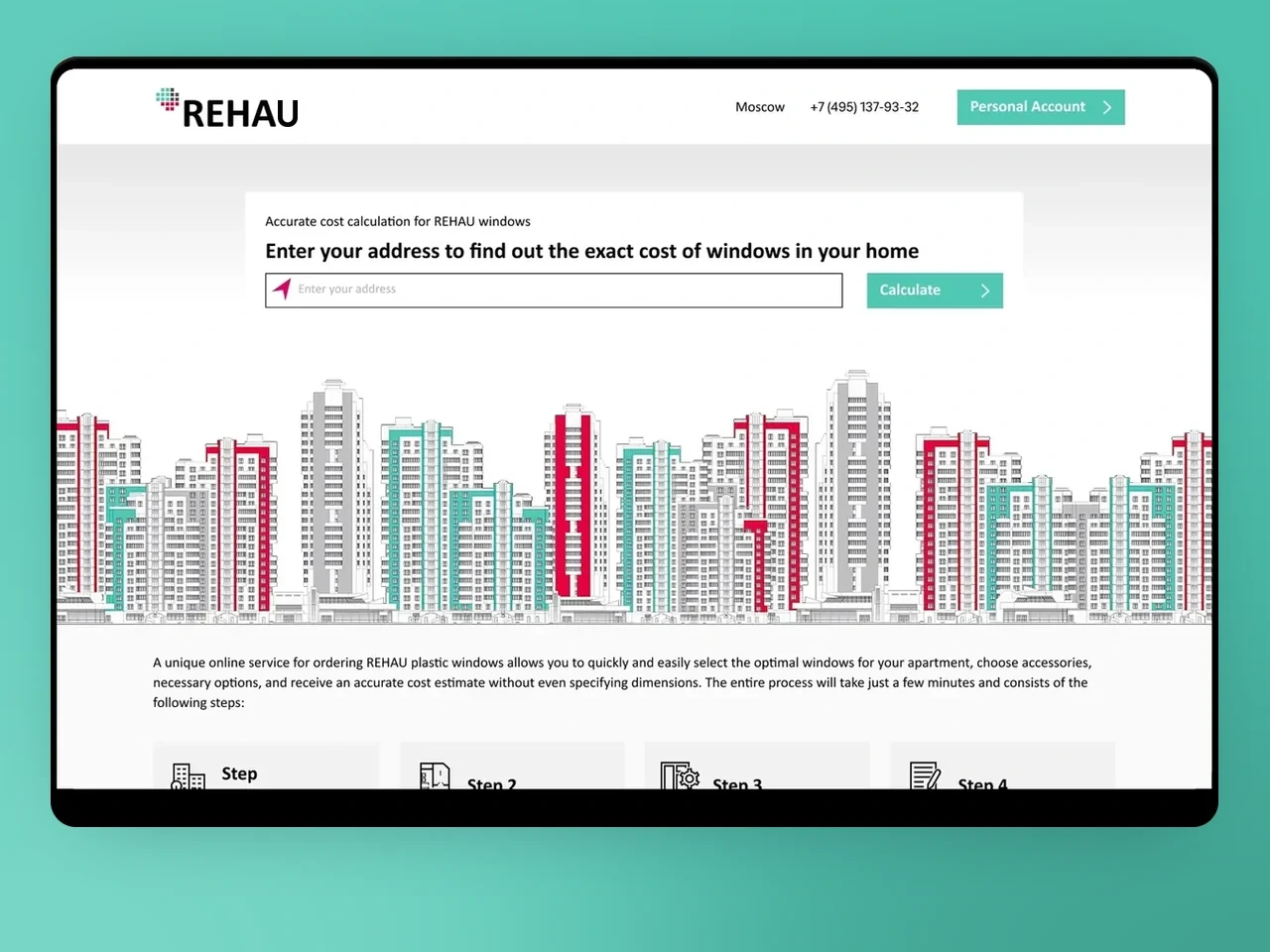
Scattered price calculators merged into one platform: server-side pricing and a CRM that receives every quote as a lead with the calculation attached.
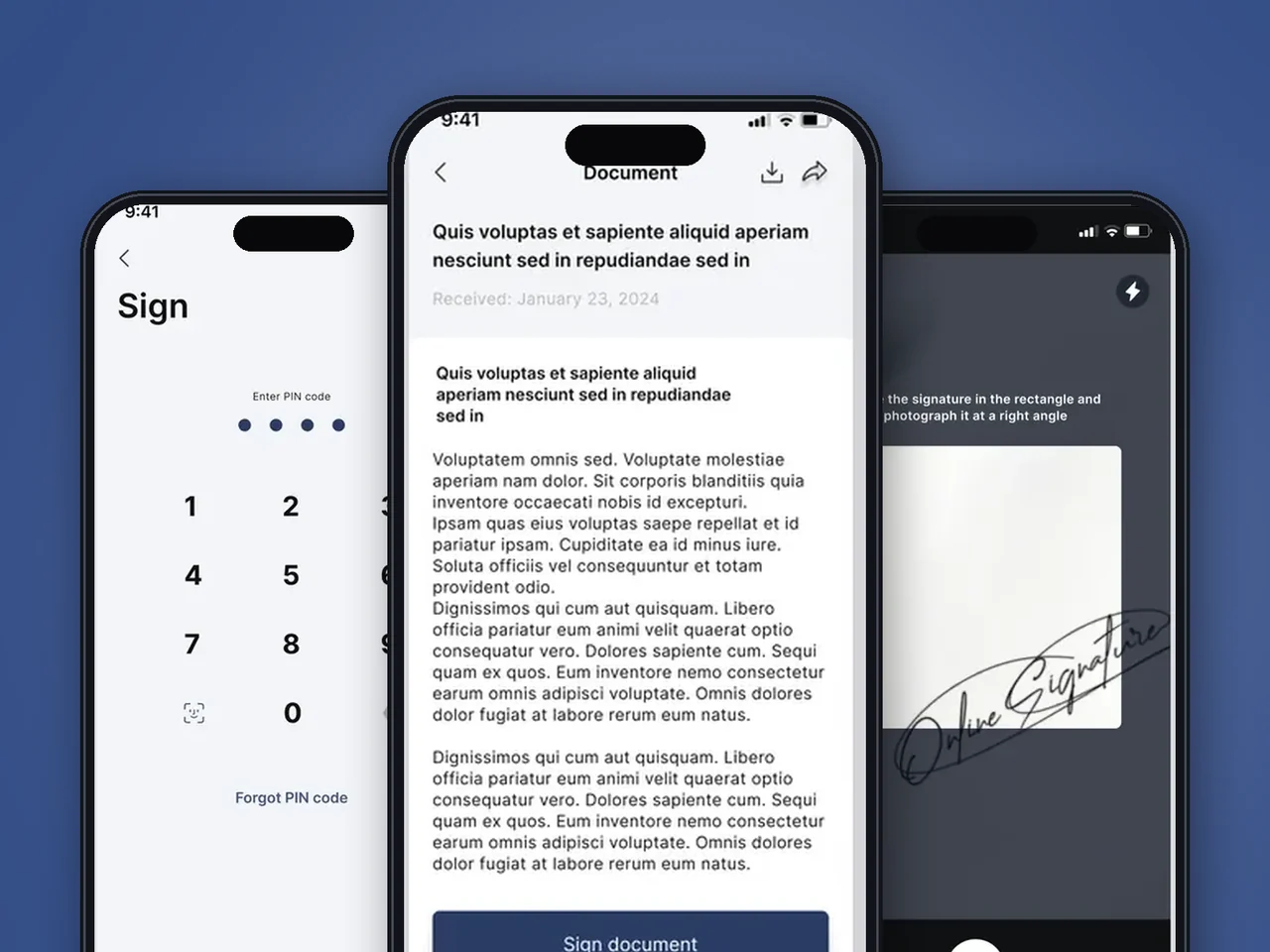
Native apps for remote document signing plus a React CRM where lawyers manage clients, send contracts and run notifications.
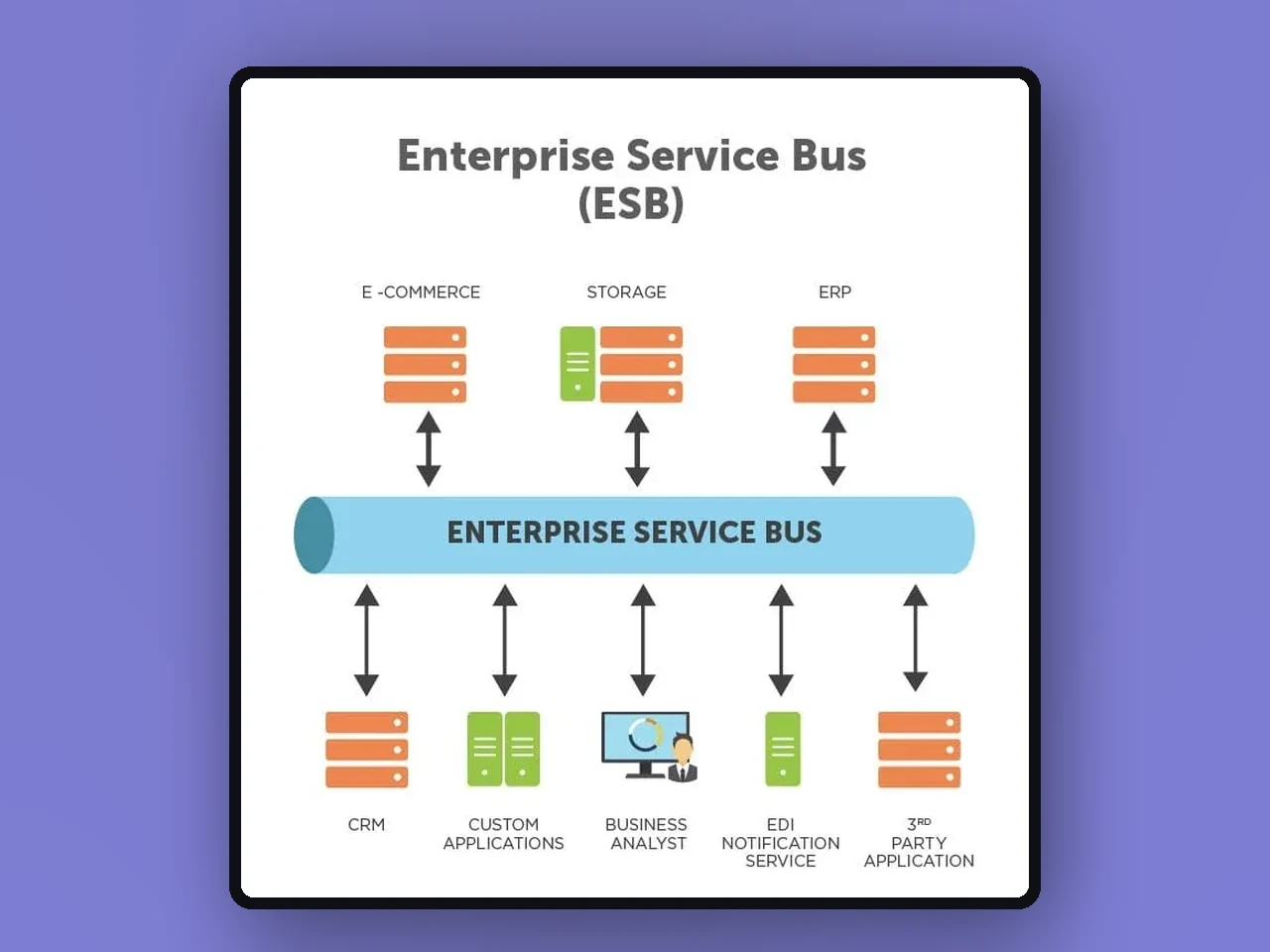
A custom data bus that syncs heterogeneous databases in parallel, with a load-control admin panel and 10x faster data exchange.
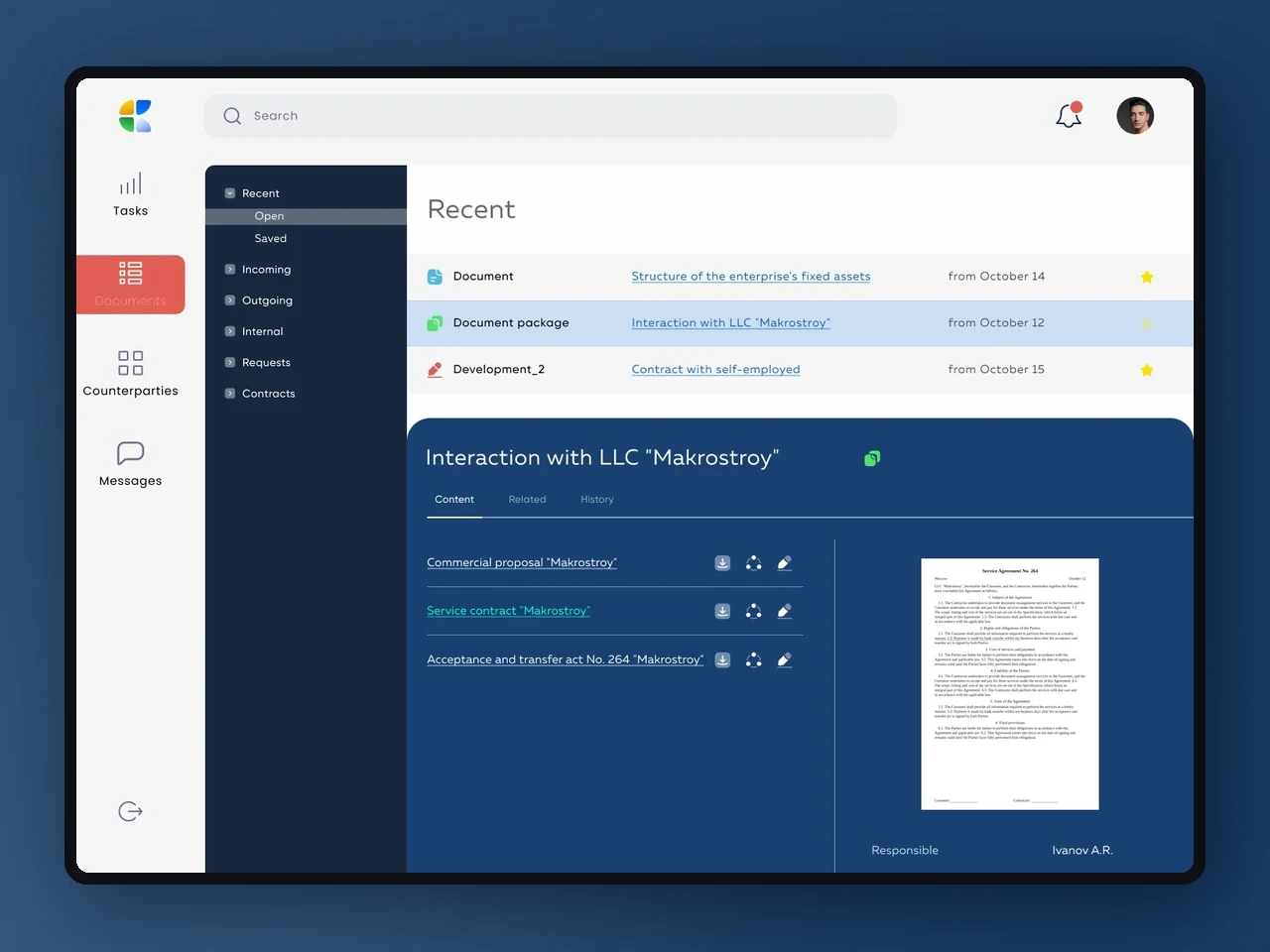
Six roles with configurable permissions, e-signature, approval routing and a role-based archive on Laravel and React.
For REHAU we merged scattered window price calculators into one platform where every quote reaches the CRM as a lead with the calculation attached. SignatoryPro pairs native iOS and Android apps with a React CRM that lawyers use to manage clients, send contracts and run notifications. The ESB project shows the integration side: a custom data bus that syncs heterogeneous databases for a large online store. View all case studies →
You can work with us on a CRM in three ways, depending on how clear the scope is and how long the work will last.
| Model | Best for | How it is billed |
|---|---|---|
| Fixed-scope project | A new CRM, an implementation or a set of integrations with a scope fixed in discovery | Agreed price and timeline, milestone payments |
| Dedicated CRM team | Ongoing CRM development, several modules in sequence, long-term support | Monthly, per team |
| Staff augmentation | In-house CRM teams that need extra Dynamics, Salesforce or full-stack engineers | Monthly, per engineer, via staff augmentation |
Choose a CRM development company by how it handles your data and your process, not by the length of its platform list. Rankings of the top CRM development companies and CRM software development firms are a useful shortlist; these checks tell you who will actually deliver.
Why teams choose YuSMP. The company was founded in 2017, has delivered more than 120 projects for over 80 clients across the US, the EU and Asia, and works with senior-only engineers who overlap with US and European business hours.
For the wider vendor decision, read our guide on how to choose a software development company.
The cost of a custom CRM depends on the number of modules, user roles and integrations, the volume of data to migrate, mobile apps and compliance needs. A contacts-and-pipeline MVP costs a fraction of a multi-team system with ERP sync and portals. We start with a short paid discovery that fixes the scope, then quote the build at a fixed price. Ongoing work can run in a dedicated team from $6,900 per month.
A focused first release with a few modules and integrations is usually delivered as a fixed-scope MVP, which typically takes 8 to 16 weeks. A full rollout across several teams, with data migration from legacy systems and many integrations, takes longer and is best delivered in stages, so people start using the CRM while later modules are still being built.
Customize a platform when standard sales and service flows cover most of your needs and you want to launch quickly. Build a custom CRM when your process is unusual and drives revenue, when integrations with legacy systems are complex, when seat licences for a large team get expensive, or when data must stay in your own cloud. The comparison table on this page shows the trade-offs.
There are three classic types of CRM software. An operational CRM automates sales, service and marketing work. An analytical CRM turns customer data into forecasts and insights. A collaborative CRM shares customer context across teams and with customers through portals. Most real systems combine all three, and vertical CRMs add the objects and rules of one industry.
Yes. Excel is not a CRM, but many teams start there, and we migrate from spreadsheets, legacy CRMs and in-house databases. We map fields, merge duplicates, validate records against rules you approve and run trial migrations on copies of real data before the final cut-over. You get a mapping document, migration reports and a rollback plan.
Yes. We sync customers, products, prices, orders and invoices with SAP, Oracle NetSuite, Dynamics 365 Business Central, QuickBooks, Xero or a custom ERP. Before building, we agree which system owns each field, so two-way sync never overwrites good data. Every integration gets error handling, logging and monitoring.
We add AI as narrow helpers on top of clean CRM data: lead and deal scoring, pipeline forecasts, call and email summaries, duplicate matching and assistants that answer questions about an account. People review anything that changes a record or contacts a customer. AI is unlikely to replace the CRM, because assistants need a structured, permissioned source of customer data.
Yes. We implement and customize Dynamics 365 Sales and Customer Service, build plugins, Power Apps and Power Automate flows, and integrate Dynamics with Microsoft 365, Teams, SharePoint and your ERP. If Dynamics turns out to be a poor fit during discovery, we will tell you and compare it with the alternatives.
Tell us how your team sells and serves customers today and what is not working. We reply within one business day with questions and a suggested scope.
Guides from our engineers on CRM selection, implementation and integration.
Share a few details and a senior consultant will reply within one business day.
Email: sales@yusmpgroup.com
Phone: +374 44 871 811
Offices: KAMAR Business Center, Vazgen Sargsyan St. 2, Yerevan, Armenia · Remote — East-Coast US overlap (9 AM–1 PM ET)