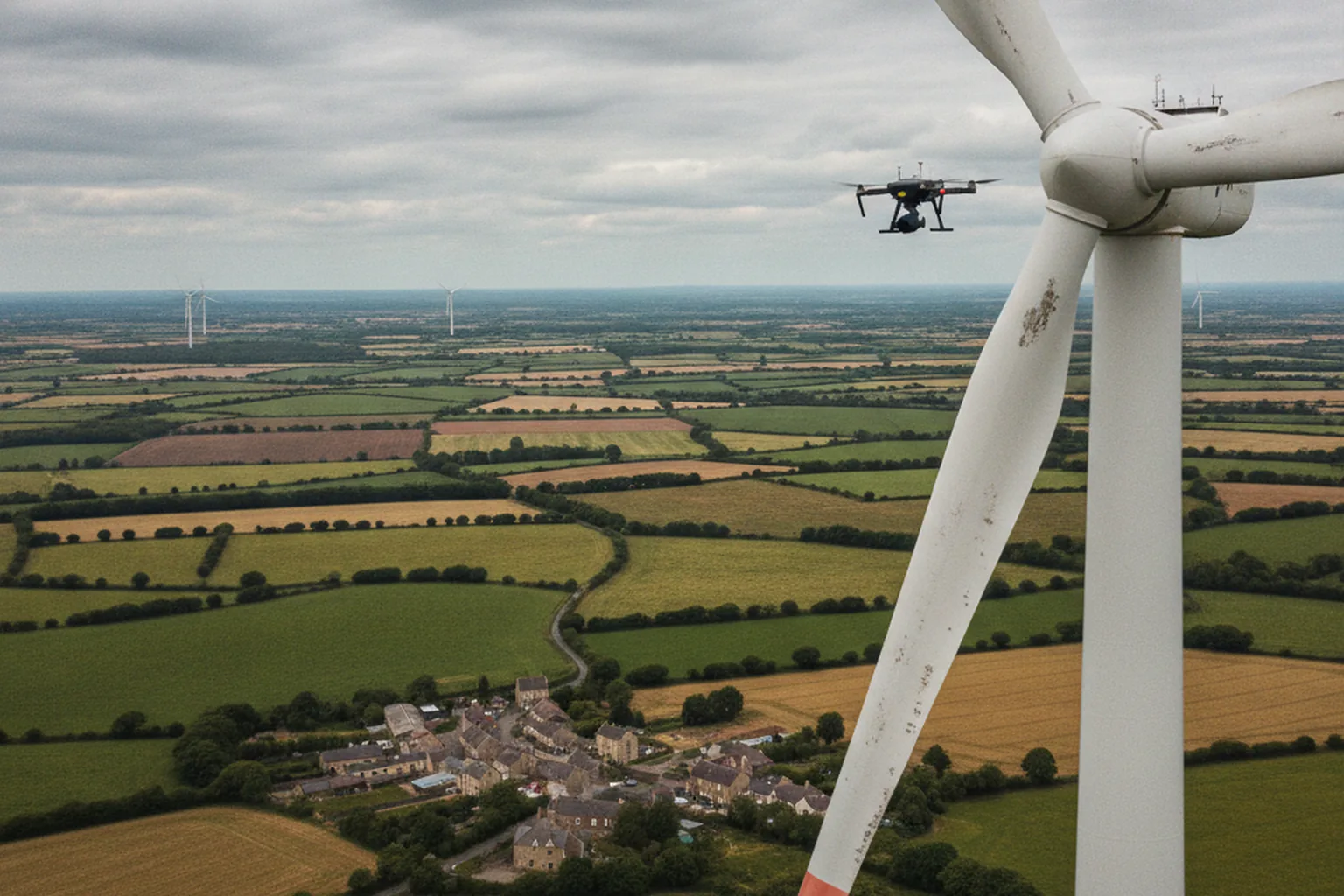

A drone software development company designs, builds and maintains the code that lets an unmanned aircraft fly safely, talk to its operators and turn every flight into usable data. Hardware gets the attention in product photos, but software decides whether a drone holds position in gusty wind, returns home when its radio link drops, uploads a clean inspection dataset and passes a review by an aviation regulator.
The hardest layer to get right is the one buyers see least: the firmware on the flight controller and the companion computer next to it. Bugs at that level do not produce an error page; they produce a crash. That is why serious drone programmes usually start with drone firmware and embedded software development and only then move up to ground control apps, fleet dashboards and analytics.
The buying criteria also changed in 2026. Since 22 December 2025 the FCC Covered List includes foreign-produced drones and their critical components, such as flight controllers and ground control stations, and the FAA’s Part 108 rule for beyond visual line of sight (BVLOS) flights is still waiting for publication. This guide explains what a drone software vendor builds, the four software layers of a drone system, PX4 vs ArduPilot, the regulations that now shape the code, realistic costs and a checklist for choosing a partner.
What does a drone software development company actually do?
A drone software vendor builds and integrates the software a drone programme needs, from autopilot firmware on the aircraft to the cloud platform where flight data is stored and analysed. Most vendors sell drone software development services across several layers rather than a single product, and the scope usually includes:
- Flight stack and firmware: customizing open-source autopilots such as PX4 or ArduPilot, or writing proprietary flight-control code, sensor drivers and estimation logic.
- Payload integration: cameras, gimbals, LiDAR, multispectral sensors, sprayers, winches and parcel release mechanisms, with the timing, power and data handling each one needs.
- Ground control station (GCS) apps: desktop, tablet or web tools to plan missions, watch telemetry and take manual control.
- Fleet and cloud platforms: aircraft registry, maintenance logs, pilot assignment, mission scheduling and over-the-air (OTA) updates.
- Data and imagery pipelines: ingest, photogrammetry, orthomosaics, 3D models, defect detection and automated reports.
- Compliance tooling: Remote ID, flight logging, airspace checks, UTM or U-space connections and audit exports.
- Enterprise integration: pushing results into the ERP, GIS, asset management or work-order systems a customer already runs.
Few clients need all seven. A start-up building its own airframe usually needs firmware, payload work and a GCS. An energy utility that flies off-the-shelf drones for inspections usually needs the cloud, data pipeline and integration layers instead. Knowing which group you belong to is the first scoping decision, and it changes the shortlist of suitable vendors.
How is UAV software development different from ordinary app development?
UAV software development differs from typical app work in three ways: the code runs on constrained real-time hardware, failures have physical consequences, and testing needs simulators and flight time, not only a browser. A web team without embedded and robotics experience can build a good dashboard and still struggle badly with the onboard layers. The fundamentals of that embedded side are covered in our guide to embedded software development.
What are the four software layers of a drone system?
Every drone system runs on four software layers: onboard (the aircraft itself), link (radio and network connections), ground (the operator’s control station) and cloud (fleet, data and integrations). Each layer has its own tech stack, its own failure modes and often its own specialist team, so a vendor’s real strengths are easiest to judge layer by layer.
Onboard layer: flight controller and companion computer
The onboard layer is the software that flies the aircraft. A flight controller runs a real-time autopilot that fuses data from the IMU, GNSS receiver, barometer and magnetometer into a position and attitude estimate, then drives the motors through control loops several hundred times per second. The same firmware owns the failsafes: low battery, geofence breach, sensor failure and loss of the command link.
Many modern drones add a companion computer, a Linux board or embedded GPU module that sits beside the flight controller. It handles heavy work the autopilot should never be slowed down by: computer vision, obstacle detection, mission logic, payload control and ROS 2 nodes. The usual rule is simple. Anything that must happen on time, every time, stays on the flight controller; anything compute-hungry moves to the companion computer.
Link layer: telemetry, video and command links
The link layer moves commands, telemetry and video between the aircraft and the ground. Most open systems use MAVLink, a lightweight messaging protocol for telemetry and commands, over a radio link, with a separate digital video downlink. Long-range and BVLOS operations add LTE or 5G modems, and multi-drone work may add mesh radios.
The most important link-layer feature is what happens when the link fails. Lost-link behaviour (return to launch, land in place, hold, or continue the mission) must be configured in firmware, matched to the operation’s risk assessment and proven in tests. Command links should also be authenticated and, where the threat model demands it, encrypted, because an open control channel is an open door to the aircraft.
Ground layer: the ground control station
The ground layer is the software the operator uses to plan, launch, monitor and, when needed, take over a flight. It can be a fork of an open-source GCS such as QGroundControl or Mission Planner, a custom tablet app, or a web console that supervises several aircraft at once.
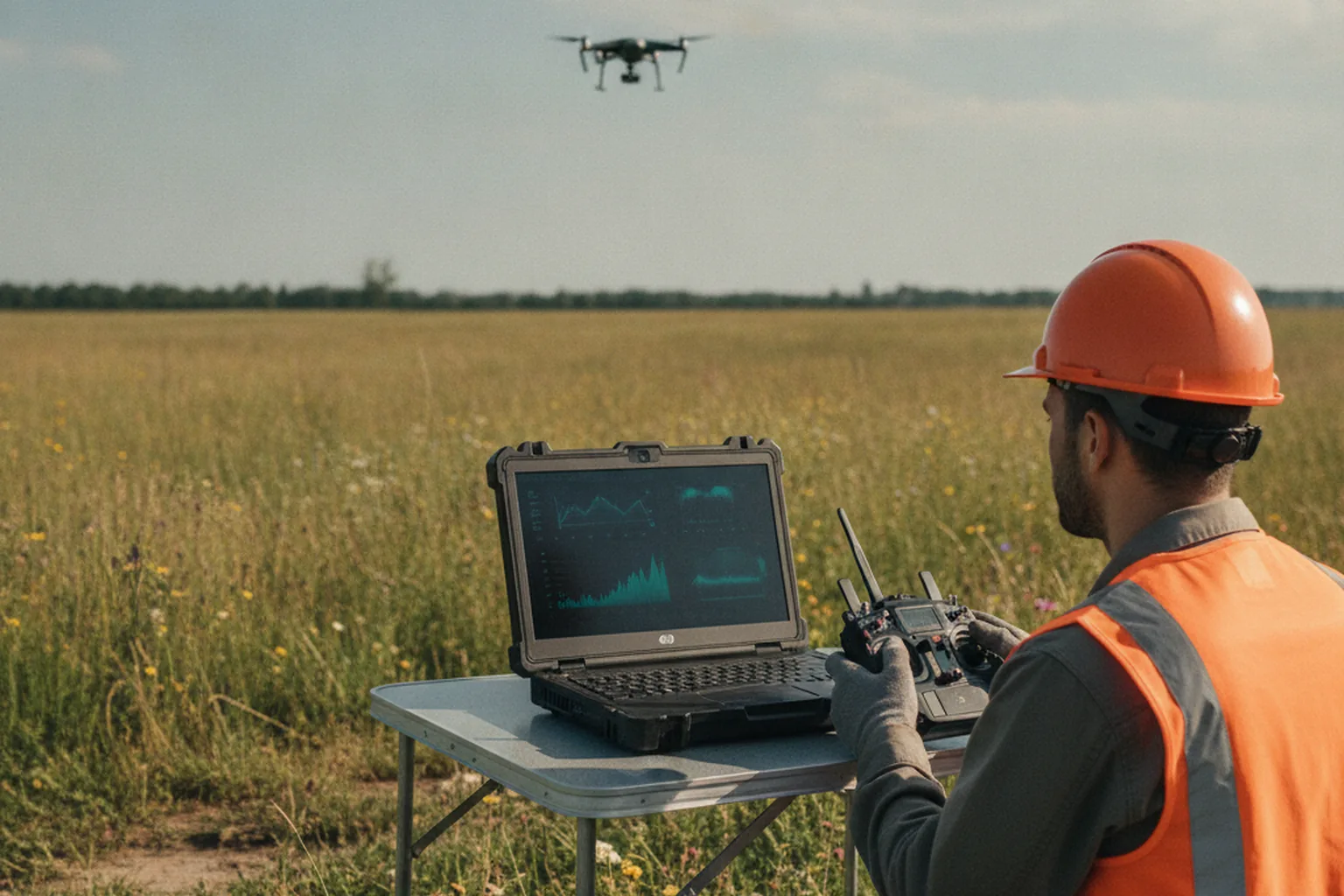
Field conditions drive the requirements more than design trends do. A good GCS works with offline maps, stays readable in direct sunlight, has controls large enough for gloved hands, shows battery and link health at a glance and never hides the emergency actions behind a menu. Multi-vehicle views and role-based access become essential as soon as one operator supervises more than one drone.
Cloud layer: fleet, data and integrations
The cloud layer turns individual flights into an operation. It stores the aircraft and pilot registry, schedules missions, distributes OTA updates, keeps flight logs for audits, processes imagery and exposes APIs to other business systems. This is classic connected-device architecture, and the patterns described in our article on IoT software development apply almost directly: device identity, secure ingest, time-series storage and remote configuration.
| Layer | What runs there | Typical tech | Main failure risk |
|---|---|---|---|
| Onboard | Autopilot, estimator, failsafes, perception, payload control | C/C++ on an RTOS (NuttX, ChibiOS), Linux companion, ROS 2 | Loss of control, crash, flyaway |
| Link | Telemetry, commands, video, network backhaul | MAVLink, digital video links, LTE/5G, mesh radios | Lost link, latency, hijacked command channel |
| Ground | Mission planning, monitoring, manual control | Qt/QGroundControl forks, Mission Planner, React or Flutter apps | Operator error caused by confusing UI |
| Cloud | Fleet registry, OTA, flight logs, data processing, APIs | Device ingest, time-series storage, GIS and map tiles, REST APIs | Data loss, bad OTA rollout, audit gaps |
Which types of drone software can you commission?
You can commission drone software for any single layer or a complete product, but most projects fall into seven recognisable types. Each type needs a different mix of embedded, mobile, cloud and data skills, which is why scoping by type saves time when you talk to vendors.
Flight control and autopilot customization
This is work on the autopilot itself: porting PX4 or ArduPilot to a new airframe or flight controller board, tuning control loops, writing drivers for new sensors, adding custom flight modes and hardening failsafes. It is the most specialised type of drone software development and the one where field testing matters most.
Ground control station software
Custom GCS projects range from rebranding and simplifying an open-source station for a specific job to building a new multi-vehicle web console. The main value usually comes from removing options: a crop-spraying crew or a bridge inspector needs five well-designed screens, not a hundred settings.
Mission planning and autonomy
Autonomy software plans and executes flights with minimal human input: automatic survey grids, facade and tower inspection patterns, precision landing, obstacle avoidance and object tracking. Much of it runs on the companion computer and relies on computer vision development for detection and tracking. Our overview of computer vision software development explains how such models are trained, optimised for edge hardware and validated.
Fleet management software
Fleet software manages many aircraft, batteries, pilots and missions across sites: availability, maintenance intervals, firmware versions, pilot currency, mission approvals and incident logs. The underlying logic is close to vehicle fleet systems, described in our guide to fleet management software development, with extra fields for airspace authorisations and flight logs.
Mapping, photogrammetry and inspection analytics
Data software turns raw images and sensor readings into deliverables: orthomosaics, digital surface models, point clouds, thermal anomaly maps and annotated defect reports. Accurate georeferencing, coordinate systems and integration with GIS tools are the hard parts; the patterns are covered in our article on geospatial software development.
Delivery and logistics orchestration
Delivery software coordinates orders, routes, landing or drop zones, battery swaps and customer notifications, and connects them to warehouse and dispatch systems. It sits at the meeting point of aviation rules and supply-chain software, so vendors with logistics software experience have an advantage when parcel volumes grow.
Counter-UAS and airspace awareness
Airspace awareness software detects, identifies and tracks drones around sensitive sites, often by reading Remote ID broadcasts and fusing radar or RF sensor data. It is a specialised and regulated field; mention it in your scope only if site security, not flight operations, is your goal.
| Industry | Typical drone software | Key integration |
|---|---|---|
| Energy and infrastructure inspection | Automated inspection flights, defect detection, report generation | Asset management and work-order systems |
| Agriculture | Field mapping, crop health indices, variable-rate spraying plans | Farm management platforms and equipment controllers |
| Logistics and delivery | Route planning, dispatch, drop-zone management, fleet tracking | Order management and warehouse systems |
| Public safety | Live video streaming, thermal search, incident mapping | Dispatch and evidence management systems |
| Construction and mining | Progress surveys, stockpile volumes, 3D site models | BIM, GIS and project management tools |
Agriculture is a good example of how the layers combine: the same flight produces imagery for agronomists and machine-readable prescriptions for sprayers. Our guide to agriculture custom software development shows where drone data fits into the wider farm stack.
PX4 vs ArduPilot: which open-source flight stack should you build on?
Choose PX4 when you ship a proprietary product, because its BSD-3-Clause license lets you keep your modifications closed. Choose ArduPilot when its very broad vehicle support and mature feature set fit your aircraft and you can meet GPLv3 obligations for the firmware you distribute. Both are production-grade, both speak MAVLink and both are used in commercial drones.
| Criterion | PX4 | ArduPilot |
|---|---|---|
| License | BSD-3-Clause (permissive; closed modifications allowed) | GPLv3 (copyleft; distributed modified firmware must come with source) |
| Governance | Hosted by the Dronecode Foundation under the Linux Foundation | Independent open-source project run by its development team, with commercial partners |
| Vehicle types | Multicopters, fixed-wing, VTOL, rovers and more | Very broad: copters, planes, VTOL, helicopters, rovers, boats and submarines |
| Real-time OS | NuttX on flight controllers | ChibiOS on most flight controllers, Linux on some boards |
| Ecosystem | MAVSDK, QGroundControl, Pixhawk hardware standard | Mission Planner, QGroundControl, MAVProxy, Pixhawk-class hardware |
| ROS 2 integration | Native DDS bridge to ROS 2 | DDS support for ROS 2 added in recent releases |
| Typical fit | Commercial products that need closed IP and a clean modular architecture | Projects that value proven features and broad hardware support and accept copyleft |
The license point is not a technicality. If you sell drones running modified ArduPilot firmware, GPLv3 requires you to make the corresponding source code available to the people who receive that firmware. Many companies are comfortable with that; others keep proprietary features on the companion computer instead. Either way, ask for a legal review of GPL obligations before shipping, and make sure your vendor tracks every open-source component and license in a software bill of materials.
When does a fully proprietary flight stack make sense?
A fully proprietary flight stack makes sense only when certification, a unique airframe or a defence customer demands full control of every line of code, and the budget allows years of flight testing. For most commercial products, building on PX4 or ArduPilot and adding proprietary layers on top is faster, cheaper and safer, because the open stacks already carry a very large number of real flight hours.
What tech stack do drone software teams use in 2026?
Drone software teams in 2026 combine embedded C and C++ for the aircraft, ROS 2 and Linux on companion computers, MAVLink for communication, and standard web, mobile and cloud tools for the ground and cloud layers. The exact mix depends on the layers in scope, but the building blocks are fairly stable across vendors.
| Area | Common choices | Notes |
|---|---|---|
| Flight firmware | C/C++ on NuttX (PX4) or ChibiOS (ArduPilot) | Hard real-time; strict coding standards and static analysis |
| Companion computer | Embedded Linux, ROS 2, C++ and Python | Perception, mission logic, payload control |
| Communication | MAVLink, MAVSDK, DDS bridges | Message signing for command authentication |
| Ground control | Qt and QGroundControl forks, React web apps, Flutter or native mobile apps | Offline maps and sunlight-readable UI |
| Cloud | Device ingest, message queues, time-series databases, object storage, GIS map tiles | Flight logs and imagery grow quickly |
| Edge AI | Optimised vision models on embedded GPUs or NPUs | Detection, tracking, obstacle avoidance |
| Simulation and testing | SITL with Gazebo or similar simulators, HITL rigs, flight log analysis | Runs in CI on every change |
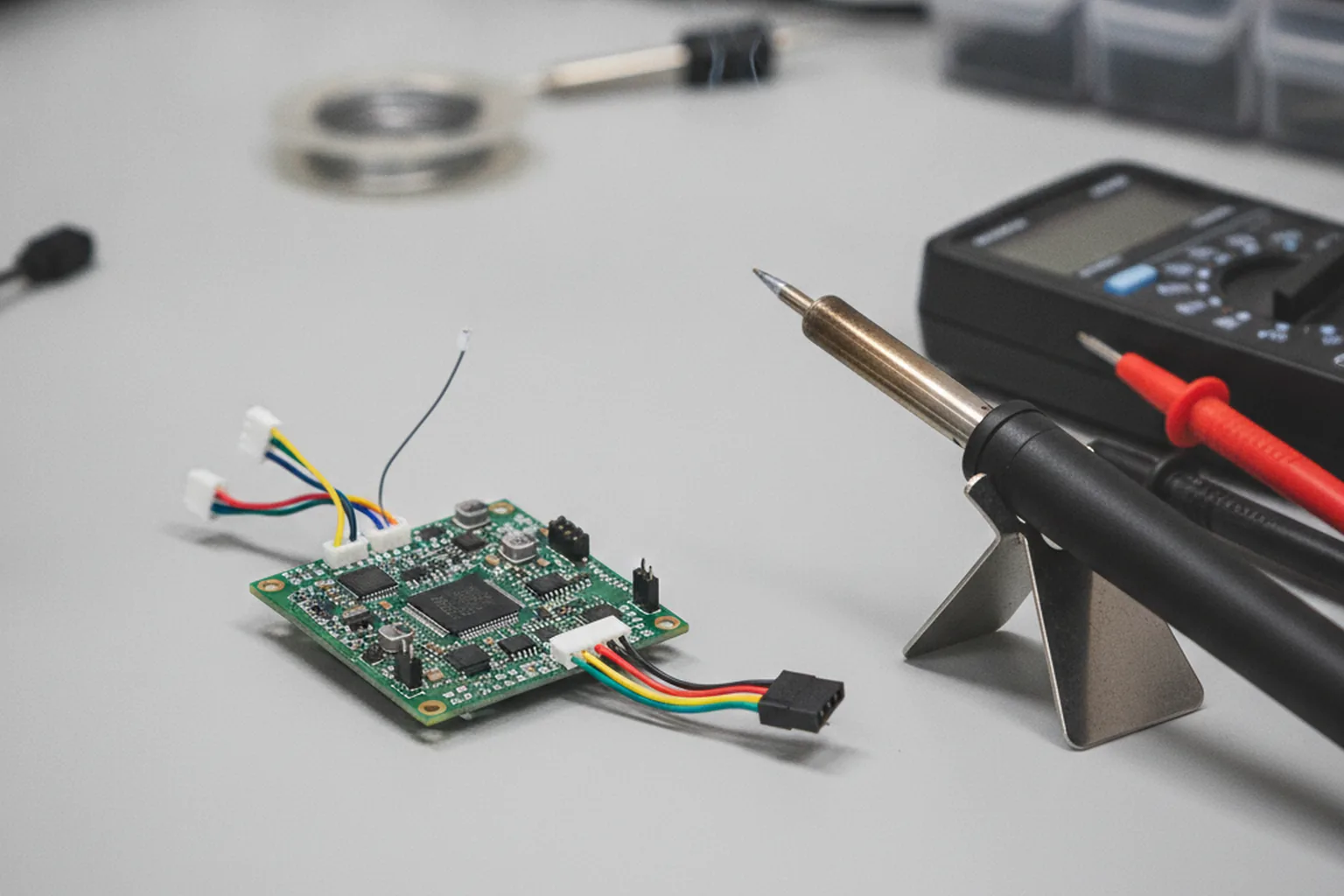
Tooling matters as much as languages. Debug probes, logic analysers, RTOS-aware debuggers and static analysis catch firmware defects long before a propeller spins. Our list of embedded software development tools covers the IDEs, probes and testing tools that drone firmware teams rely on.
Which 2026 regulations shape drone software in the US and EU?
Five sets of rules shape drone software in 2026: FAA Remote ID, the proposed Part 108 BVLOS rule, the FCC Covered List decision of 22 December 2025, the American Security Drone Act for federal use, and the EU’s UAS and U-space regulations. Each translates into concrete software requirements, which is why regulatory awareness is now a basic test for any drone vendor.
Remote ID (14 CFR Part 89, ASTM F3411)
Remote ID requires most drones flown in the US to broadcast who they are and where they are. Under 14 CFR Part 89, a standard Remote ID drone broadcasts its identification, position and the location of its control station from built-in firmware and hardware, while older aircraft can use a separate broadcast module. ASTM F3411 is the consensus standard that defines how the broadcast works. For software teams this means Remote ID logic in the firmware, tamper-resistant configuration and tests that prove the broadcast starts with every flight. Under the Part 108 proposal, aircraft would need standard Remote ID built in rather than an add-on module.
Part 108 BVLOS rule (proposed)
Part 108 is the FAA’s proposed framework for routine beyond visual line of sight operations. The proposal was published on 7 August 2025, together with Part 146 for automated data service providers such as UTM services, following the FAA Reauthorization Act of 2024 and Executive Order 14307, “Unleashing American Drone Dominance”, of 6 June 2025. On 28 January 2026 the FAA reopened the comment period on electronic conspicuity and right-of-way questions. The final rule has been under review at the Office of Information and Regulatory Affairs since 10 July 2026, and as of November 2026 it had not been published in the Federal Register. Routine BVLOS flights still require a Part 107 waiver.
The proposal is performance-based. Instead of requiring an airman certificate for every flight, it relies on an operations supervisor and flight coordinators, and it expects detect-and-avoid capability for certain flights. The design implications are already clear: complete telemetry and flight logging, integration points for detect-and-avoid sensors, and APIs to talk to Part 146 data service providers. Building these in now is cheaper than retrofitting them after the final rule arrives.
FCC Covered List: foreign-produced drones and components
On 22 December 2025 the FCC (DA 25-1086) added foreign-produced unmanned aircraft systems and their critical components to its Covered List, based on a National Security Determination. The covered components include data transmission devices, communications systems, flight controllers, ground control stations, controllers, navigation systems, batteries and smart batteries, and motors. New models of covered equipment cannot receive FCC equipment authorization unless the Department of War or the Department of Homeland Security issues a specific determination. The action is not retroactive, so drones already in service are not grounded.
For software teams the main consequence is traceability. A vendor should know the origin of every flight controller, radio and navigation module in your bill of materials, design the software so hardware can be swapped without a rewrite, and document your exemption status if you rely on one. A firmware port to a new flight controller board is now a common project for exactly this reason.
American Security Drone Act (FAR 52.240-1)
The American Security Drone Act matters if your customers are federal agencies or federal contractors. Implemented in the Federal Acquisition Regulation as clause 52.240-1, it prohibits federal agencies from operating, or contracting for the operation of, drones from covered foreign entities from 22 December 2025, and it bars contractors from using federal funds on them. Software built for this market should run on compliant hardware and document its supply chain. You will also see the term “Blue UAS” used for drones cleared for US government use; treat any such claim as something to verify, not assume.
EU: UAS regulations and U-space
In the EU, drone software must comply with Delegated Regulation (EU) 2019/945 on UAS technical requirements and Implementing Regulation (EU) 2019/947 on UAS operations, plus the U-space package led by Implementing Regulation (EU) 2021/664, applicable since 26 January 2023. Inside a designated U-space airspace, four services are mandatory: the network identification service, the geo-awareness service, the UAS flight authorisation service and the traffic information service. Software must therefore be able to connect to certified U-space service providers, request flight authorisations, receive geo-awareness data and share its position.
| Rule | Jurisdiction | Status (November 2026) | What the software must do |
|---|---|---|---|
| Remote ID, 14 CFR Part 89 | US | In force | Broadcast identification and location from firmware or a module |
| Part 108 BVLOS + Part 146 | US | Proposed (NPRM 7 Aug 2025); final rule at OIRA since 10 Jul 2026, not yet published | Logging, detect-and-avoid integration, data service provider APIs, built-in Remote ID |
| FCC Covered List, DA 25-1086 | US | In force since 22 Dec 2025, not retroactive | Traceable bill of materials, hardware-agnostic design, documented exemptions |
| ASDA, FAR 52.240-1 | US federal | In force since 22 Dec 2025 | Compliant hardware and supply-chain records for federal work |
| (EU) 2019/945, 2019/947, U-space 2021/664 | EU | In force; U-space applicable since 26 Jan 2023 | Connect to U-space services: network ID, geo-awareness, flight authorisation, traffic information |
Note: this section summarises public rules for planning purposes and is not legal advice. Confirm your obligations with counsel and your aviation authority before you design, sell or fly.
How is drone software developed and tested?
Drone software is developed in stages that move from simulation to the bench to the field, because an aircraft is not a lab and every real flight carries risk. A typical project follows eight steps:
- Discovery and concept of operations. Define missions, environments, airspace, payloads, operators and the regulations that apply. This document drives every later decision.
- Architecture and hardware selection. Choose the flight stack, flight controller, companion computer, radios and sensors, with supply-chain origin checked against the FCC and ASDA rules.
- Firmware and integration. Port or customize the autopilot, write drivers, integrate the payload and configure failsafes and lost-link behaviour.
- Ground and cloud development. Build the GCS, fleet backend, data pipeline and integrations in parallel with the firmware work.
- Software-in-the-loop (SITL) testing. Run the real flight code against a simulator such as Gazebo on every change, including failure injection for sensor loss, wind and link drops.
- Hardware-in-the-loop (HITL) testing. Run the firmware on the actual flight controller connected to a simulated world to catch timing, driver and resource problems.
- Field trials and flight log review. Fly in controlled conditions, expand the envelope step by step and analyse every log before the next sortie.
- Compliance package, OTA and operations. Prepare documentation for waivers or authorisations, set up signed OTA updates with rollback, and monitor the fleet after launch.
Why are SITL and HITL testing not optional?
SITL and HITL testing are not optional because they are the only safe way to test failure scenarios that you cannot or should not reproduce in the air, such as a GNSS outage over a city or a motor failure at altitude. A vendor without an automated simulation pipeline will discover those scenarios during field trials, which is slower, more expensive and more dangerous. The same shift-left logic applies as in any software project: catch defects where they are cheapest to fix.
How much does drone software development cost in 2026?
Drone software development in 2026 typically costs from about $15,000 for a simple app to more than $200,000 for an enterprise or swarm platform, according to published market ranges. Treat these figures as orientation only: the number of layers, the autonomy level and compliance work move the price more than anything else.
| Scope | Market range | Typical timeline | Source |
|---|---|---|---|
| Simple drone app | $15k–$45k | 2–3 months | Wezom, 2026 |
| Mid-level product | $50k–$150k | 4–7 months | Wezom, 2026 |
| Enterprise or swarm platform | $200k+ | Longer, project-specific | Wezom, 2026 |
| Drone control software | $30k–$80k | – | Wezom, 2026 |
| Mapping software | $60k–$120k | – | Wezom, 2026 |
| Data processing software | $50k–$150k | – | Wezom, 2026 |
| AI-based drone software | $100k+ | – | Wezom, 2026 |
| Fleet management platform | $200k+ | – | Wezom, 2026 |
| Flight-control integration (MAVLink, telemetry) | $5k–$70k | – | 2026 market guides |
| GCS app (mobile or web) | $10k–$100k | – | 2026 market guides |
| Each advanced autonomy feature (object detection, obstacle avoidance, swarm) | about $15k–$40k | – | 2026 market guides |
The biggest cost drivers are easy to spot once the scope is written down:
- Hardware variety: every additional airframe, flight controller or payload multiplies integration and test effort.
- Autonomy level: manual flight with assisted modes is far cheaper than vision-based autonomy or multi-vehicle coordination.
- BVLOS and detect-and-avoid: redundant links, detect-and-avoid integration and stricter logging add significant scope.
- Data volume: high-resolution imagery, LiDAR and video drive storage, processing and bandwidth costs.
- Compliance and supply-chain work: hardware swaps, documentation and waiver support take engineering time.
- Field-test logistics: test sites, pilots, spare aircraft and travel are real line items.
Budget for ongoing work as well. Market guides estimate maintenance at roughly 15–25% of the initial build per year, covering autopilot upstream updates, OS and library patches, new hardware revisions and regulatory changes.
Should you build custom drone software or buy a platform?
Buy an off-the-shelf platform when standard missions on supported drones cover your needs; build custom software when you own the aircraft or payload, need full control of your data, or serve federal customers with strict supply-chain rules. Many companies end up with a hybrid: a commercial platform for routine work and custom software for what makes them different.
| Option | Best when | Trade-offs |
|---|---|---|
| Off-the-shelf platform (fleet or mapping SaaS) | Small to mid fleets, standard drones, standard deliverables | Fast start, per-seat or per-flight fees, limited customization, vendor controls the data |
| Custom software on an open stack | Own airframe or payload, proprietary workflows, data ownership, federal customers | Higher upfront cost and longer timeline, full control of IP and roadmap |
| Hybrid | Routine missions on a platform plus custom analytics, integrations or payload software | Integration work at the boundary, but the best balance for many enterprises |
Run the numbers over three to five years, not one. Platform fees that look small for ten drones can exceed a custom build at a hundred, while a custom build that serves only one standard mission rarely pays back.
How to choose a drone software development company: a 10-question checklist
To choose the right drone software partner, test its real flight experience, its simulation pipeline, its regulatory and supply-chain awareness and its approach to security and IP before you look at price. These ten questions separate experienced teams from generalists:
- What have you shipped that actually flies? Ask for flight hours, deployed fleets and references you can call.
- How deep is your PX4 or ArduPilot experience? Look for ported boards, custom modules and, ideally, upstream contributions.
- Show us your SITL and HITL pipeline. It should run automatically on every change and include failure injection.
- How have you implemented Remote ID and UTM or U-space connections? Ask for concrete examples, not plans.
- How do you handle the FCC Covered List and ASDA? A good vendor talks about bill-of-materials origin and hardware-agnostic design without prompting.
- How do you secure the system? Expect signed firmware, authenticated and encrypted links, secure boot where hardware supports it and OTA rollback.
- Who owns the IP, and how do you manage open-source licenses? You need clear ownership terms and a software bill of materials covering BSD and GPL components.
- Do you have a hardware lab and test-flight access? Bench rigs and flight sites shorten every iteration.
- What happens after launch? Ask about support SLAs, upstream update policy and incident response.
- How much working-time overlap will we have? Field trials and incidents need fast answers from the people who wrote the code.
Red flags when hiring a drone software vendor
- No flight logs, field references or video of their software flying.
- “We will test it in the field” instead of a simulation and HITL plan.
- No answer on Remote ID, Part 108 or the FCC Covered List.
- Vague IP terms, or no awareness of the GPLv3 implications of modified ArduPilot firmware.
- Unsigned firmware, open command links or OTA updates without rollback.
What is next for drone software in 2026–2027?
Over the next year, drone software will be shaped mostly by regulation catching up with routine BVLOS flight and by more autonomy moving onto the aircraft. Five developments are worth planning for:
- Part 108 finalisation: once published, it should turn many waiver-based BVLOS operations into routine ones and create demand for compliant logging, detect-and-avoid and data service integrations.
- U-space roll-out: as EU member states designate more U-space airspaces, connecting to service providers becomes a standard feature rather than a project.
- Edge AI for detect-and-avoid and inspection: better embedded processors make on-board detection and real-time defect flagging practical on smaller aircraft.
- Drone-in-a-box automation: docking stations that charge, launch and recover drones without a pilot on site push more logic into fleet and remote-operations software.
- Multi-vehicle operations: one operator supervising several aircraft requires new GCS designs, fleet scheduling and stronger automation safeguards.
The common thread is that software, not airframes, will decide which operators scale. Teams that invest now in clean architecture, simulation and compliance will adapt to the final rules with configuration changes rather than rewrites.
FAQ
What does a drone software development company do?
A drone software development company builds the code that makes an unmanned aircraft fly, communicate and deliver business value. Typical work covers flight-controller firmware and autopilot customization, payload integration, ground control station apps, fleet management and cloud data platforms, imagery processing and compliance features such as Remote ID and flight logging. Many vendors also connect drone data to the customer's ERP, GIS or asset management systems.
How much do drone software development services cost?
Market ranges published in 2026 put a simple drone app at about $15,000 to $45,000, a mid-level product at about $50,000 to $150,000 and enterprise or swarm platforms above $200,000 (Wezom). Flight-control integration alone is often quoted at $5,000 to $70,000 and a ground control station at $10,000 to $100,000. Plan an extra 15 to 25 percent of the initial build per year for maintenance.
Is PX4 or ArduPilot better for a commercial drone product?
PX4 is usually the safer choice for a proprietary commercial product because its BSD-3-Clause license lets you keep your modifications closed. ArduPilot is a strong choice when its broad vehicle support and mature feature set fit your aircraft, but it is licensed under GPLv3, so distributing modified firmware brings source-sharing obligations. Get a legal review of the license before you ship either stack.
Do drones need Remote ID software in the US?
Yes, most drones flown in the US must comply with Remote ID under 14 CFR Part 89. A standard Remote ID drone broadcasts its identification, position and the location of its control station from built-in firmware and hardware, while older drones can use a broadcast module. Under the proposed Part 108 BVLOS rule, aircraft would need standard Remote ID built in rather than an add-on module.
What is Part 108 and is it in force yet?
Part 108 is the FAA's proposed rule for routine beyond visual line of sight drone operations, published as a proposal on 7 August 2025 together with Part 146 for automated data service providers. The comment period was reopened on 28 January 2026. As of November 2026 the final rule had not been published in the Federal Register, so routine BVLOS flights still require a Part 107 waiver.
Can I still use foreign-made flight controllers after the FCC Covered List decision?
Drones and components already in service are not grounded, because the 22 December 2025 FCC action is not retroactive. New foreign-produced drones and critical components, including flight controllers, ground control stations, data links and navigation systems, cannot receive FCC equipment authorization unless the Department of War or DHS grants a specific determination. Check your bill of materials and confirm your position with counsel.
How long does it take to build custom drone software?
A simple drone app typically takes about 2 to 3 months and a mid-level product about 4 to 7 months, according to 2026 market estimates from Wezom. Enterprise fleet platforms, swarm features or BVLOS-ready systems take longer because field trials, simulation pipelines and compliance documentation add weeks that a pure software project does not need.
Sources
- Federal Register, Normalizing Unmanned Aircraft Systems Beyond Visual Line of Sight Operations (FAA proposed rule, Parts 108 and 146, 7 August 2025)
- Federal Register, Normalizing UAS BVLOS Operations: Reopening of Comment Period (28 January 2026)
- FCC, DA 25-1086: Covered List update on UAS and UAS critical components (22 December 2025) and National Security Determination for UAS
- Federal Register, Federal Acquisition Regulation: Prohibition on Unmanned Aircraft Systems From Covered Foreign Entities (FAR 52.240-1)
- EASA, U-space regulatory framework (Implementing Regulation (EU) 2021/664)
- PX4, PX4 Autopilot User Guide and PX4-Autopilot repository (BSD-3-Clause)
- Wezom, Cost of Drone Software Development in 2026